HomeBlogGuideKarate Mats Cost: Prices & What Affects Them
Karate Mats Cost: Prices & What Affects Them
The cost of karate mats depends on EVA foam thickness, density, tile size, order volume and delivery terms. For an 8 × 8 m dojo, 64 pieces of 100 × 100 cm tiles cover the floor before cutting allowance and spares. Send us the floor plan and delivery destination for an itemized factory quotation. Those totals are tiles plus estimated freight, not a Crosste quote.
Available thicknesses include 2, 2.5, 3, 4 and 5 cm. Density options are 80, 100 and 120 kg/m³ for 2–3 cm models; 4–5 cm models are available at 80 kg/m³. Confirm the selected size and configuration with our team.
Thickness
Available density
Typical purchasing consideration
2 cm
80 / 100 / 120 kg/m³
Compare available density options at the same thickness, and ask for product samples or relevant test data when firmness and impact performance matter.
2.5 cm
80 / 100 / 120 kg/m³
Compare available density options at the same thickness, and ask for product samples or relevant test data when firmness and impact performance matter.
3 cm
80 / 100 / 120 kg/m³
Compare available density options at the same thickness, and ask for product samples or relevant test data when firmness and impact performance matter.
4 cm
80 kg/m³
Confirm the selected size and configuration with our team.
5 cm
80 kg/m³
Confirm the selected size and configuration with our team.
How Much Do Karate Mats Cost?
Karate mat project cost is driven by foam density, thickness, tile size, quantity, branding and freight. Crosste does not publish list prices. Retail reference prices are not directly comparable with factory quotations because product specifications, order volumes and shipping terms differ.
For a meaningful cost comparison, request quotations for the same EVA grade, thickness, tile size, quantity and Incoterms.
What Are Karate Mats Called?
Karate mats are most often called tatami mats, puzzle mats or interlocking EVA mats. In a dojo you may also hear "kumite mats", "striking mats" or "dojo floor tiles".
Tatami mats: the common market term. It comes from the traditional Japanese woven-straw floor, but modern karate versions are foam, not straw.
Puzzle or interlocking mats: EVA foam tiles with jigsaw edges that lock together without adhesive.
Kumite or striking mats: the same foam tiles, named by how they are used.
Karate and taekwondo mats may use similar interlocking EVA constructions. Surface texture, firmness and performance requirements should be compared model by model.
What Drives the Price of Karate Mats
Foam density
EVA foam density affects material weight and can influence the feel of the mat. Compare available density options at the same thickness, and ask for product samples or relevant test data when firmness and impact performance matter. For our 4–5 cm models, the available density is 80 kg/m³.
The quote will not rise in exact step with those percentages, because cutting, printing, packing and margin do not scale with foam weight. Ask for 80, 100 and 120 kg/m³ quoted side by side on the same tile to see the real step for your order.
Thickness
Our standard karate mat thickness options are 2, 2.5, 3, 4 and 5 cm. Select thickness according to training activities and required cushioning, then confirm firmness and impact performance for the intended use. The karate mats guide covers that matching in full.
Karate mat project cost is driven by foam density, thickness, tile size, quantity, branding and freight. Crosste does not publish list prices.
Tile size
We offer 100 × 100 cm and 50 × 50 cm interlocking EVA tiles. Larger tiles reduce piece count and joints; smaller tiles may simplify fitting around irregular edges. Request a layout-based tile count and packing plan.
Colors, logos and custom specs
Custom colors, branding and selected specifications may be available for qualifying orders. Share your artwork, required quantity and technical requirements so our factory can confirm feasible options, samples, costs and production timing. Crosste's OEM and ODM service handles these options.
Freight, volume and lead time
Production lead time depends on order quantity, selected specifications and customization. Transit time varies by shipping method and destination. Both will be confirmed in your quotation. Standard mats usually take 2–4 weeks to produce. Crosste coordinates export logistics, global sales support, and after-sales follow-up for international buyers.
Always compare quotes on the same terms. A low unit price with freight excluded can cost more than a higher unit price with freight included.
Budget Worksheet: What a Dojo Floor Really Costs
Use this formula:
Required tiles = round up (floor area ÷ effective tile coverage) + additional tiles for cutting and spares. Estimated project cost = ordered tile quantity × quoted unit price + freight + accessories and other agreed charges.
Tile counts for common dojo sizes, before spares:
Floor size
100 × 100 cm tiles
50 × 50 cm tiles
6 × 6 m
36
144
8 × 8 m
64
256
10 × 10 m
100
400
Worked example: 8 × 8 m dojo, 100 × 100 cm tiles
Estimate tile count from floor area ÷ tile coverage, then add cutting/spares, freight and accessories. Compare supplier quotes on the same thickness, density, tile size, branding and Incoterms.
Line
Calculation
Quantity
Floor tiles
8 × 8 m
64
Spares and cuts (8%)
64 × 0.08 = 5.1, rounded up
6
Tiles to order
64 + 6
70
A higher density or thicker tile raises the tile line. Wall mats and protective padding go on a separate line.
Ask every supplier for the same five details so quotes can be compared fairly:
Foam density in kg/m³
Thickness in cm
Tile size
Freight terms and destination
Lead time, standard or custom
Why Cheap Mats Cost More Over Time
A lower initial price does not always mean a lower lifetime cost. Compare thickness, density, recovery after compression, surface wear, seam fit and replacement needs under your expected class schedule.
For long-term budgeting, calculate cost per year only when expected service life is supported by supplier records, relevant tests or your own replacement history. If lifespan is unknown, compare product quality, warranty terms and total delivered cost instead. A tile that costs 67% more only has to last 67% longer to break even. For a dojo with daily classes, a higher-density tile often clears that bar. For a casual home space, a lighter spec can be reasonable.
Karate Mats vs BJJ Mats: Why the Price per m² Differs
Karate interlocking EVA tiles and BJJ roll-out mats have different constructions and installation requirements. Compare complete systems by floor area, padding structure and project scope rather than comparing their headline unit prices alone. A competition wrestling floor is a 12 × 12 m modular system, 40–50 mm thick, so it sits on a different price scale; the drivers behind wrestling mats cost are set out separately.
Get a Dojo Floor Quote
Request a factory-direct karate mat quotation. Send your floor dimensions, preferred tile size, thickness, density option, order quantity, logo requirements and delivery destination. Our factory team will confirm product compatibility, packing, pricing and lead time.
FAQ
How much does a karate mat cost?
Karate mat costs vary with EVA thickness, density, tile size, quantity and shipping terms. For wholesale orders, share your required specifications and destination to receive an itemized factory quotation.
How much do mats cost?
Price depends on density, thickness, tile size, customization and freight. Crosste is a manufacturer—send floor size, preferred thickness/density, tile format, quantity and destination for a specification-based quotation rather than relying on published retail per-square-foot bands.
What should be included in a wholesale karate mat quote?
Confirm thickness, density, tile size, quantity, edge strips, branding, packing, Incoterms and lead time so supplier quotes can be compared on equal terms.
What are karate floor mats called?
They are usually called karate mats, tatami mats, puzzle mats or interlocking EVA mats. You may also see them sold as kumite or striking mats, or as dojo floor tiles. Modern versions are foam tiles with jigsaw edges rather than the woven straw the original Japanese tatami name refers to.
What is the cost per m² of karate mats by thickness?
Price depends on density, thickness, tile size, customization and freight. Crosste is a manufacturer—send floor size, preferred thickness/density, tile format, quantity and destination for a specification-based quotation rather than relying on published retail per-square-foot bands.
What does a home 3 × 3 m karate floor cost?
Price depends on density, thickness, tile size, customization and freight. Crosste is a manufacturer—send floor size, preferred thickness/density, tile format, quantity and destination for a specification-based quotation rather than relying on published retail per-square-foot bands.
Where can I buy karate mats near me?
Crosste is a manufacturer and B2B supplier, not a local shop, so orders go through a quote rather than in-store stock. Crosste coordinates export logistics, global sales support, and after-sales follow-up for international buyers.
Which karate mat specifications are suitable for school or dojo bulk orders?
Choose thickness and available density options around class activities, daily usage, room dimensions and maintenance needs. Our factory can confirm available combinations and provide samples for evaluation.
Can I get custom karate mats?
Yes. We can review requests for colors, branding and selected sizes. Available thickness and density combinations depend on the model. Send your artwork and order requirements for factory feasibility and sampling confirmation.
How many mats do I need for a dojo?
Divide your floor area by the tile area, then add 5–10% for cuts and spares. A 6 × 6 m floor needs 36 tiles at 100 × 100 cm, an 8 × 8 m floor needs 64, and a 10 × 10 m floor needs 100. With 50 × 50 cm tiles, the counts are 144, 256 and 400.
Are tatami mats the same as karate mats?
Often, in practice, but not strictly. "Tatami" is the common market name for karate foam tiles, taken from the traditional Japanese woven floor. It also names a surface texture on BJJ and judo mats, which are PVC-covered products with a different construction from EVA karate tiles.
Do karate mats work outdoors?
Not by default. Most EVA tile floors are specified for indoor dojo use, and weatherproofing is not something we claim for them. If you need an outdoor floor, send the conditions and your specs so a suitable option can be quoted.
How long do karate mats take to arrive?
Standard mats usually take 2–4 weeks to produce. Custom orders are scheduled and confirmed before production, so the date depends on the spec. Transit time comes on top of that and depends on your destination and shipping terms.

 Home Use Roll Up Wrestling Mat for Training and Practice
 Custom MMA Mats
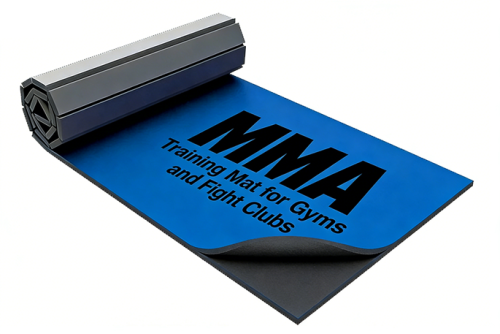 BJJ Mats Durable Training Mats for Martial Arts Gyms
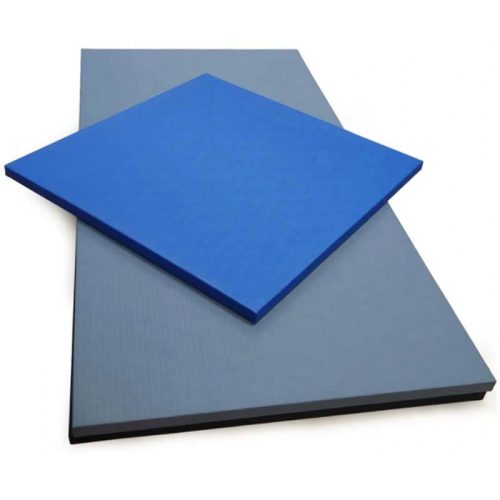 Judo Tatami Custom Size Mats for Academy and Competition
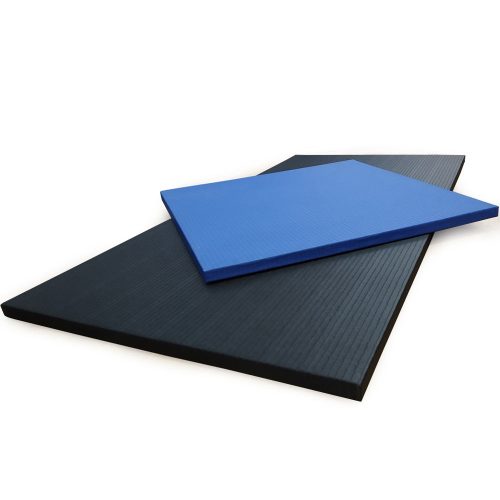 Judo Flooring Customizable Mats for Schools and Academies
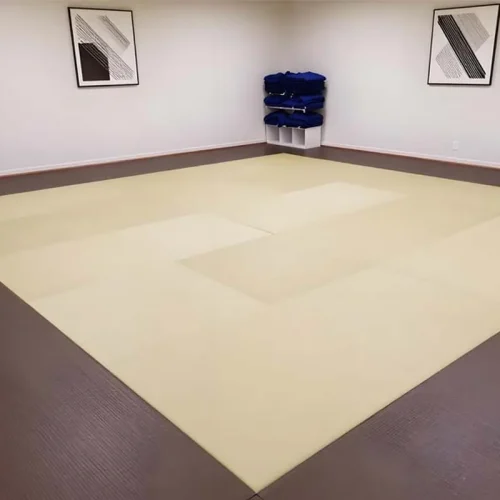 Judo Mat Durable Training Mat for Dojos and Clubs
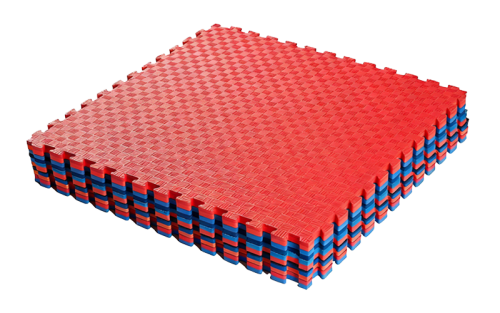 Karate Mats Impact Absorption for Dojo Training
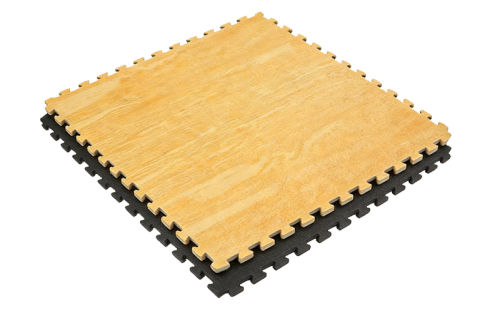 Wood Grain EVA Taekwondo mat Durable Anti Slip Flooring for Dojos