







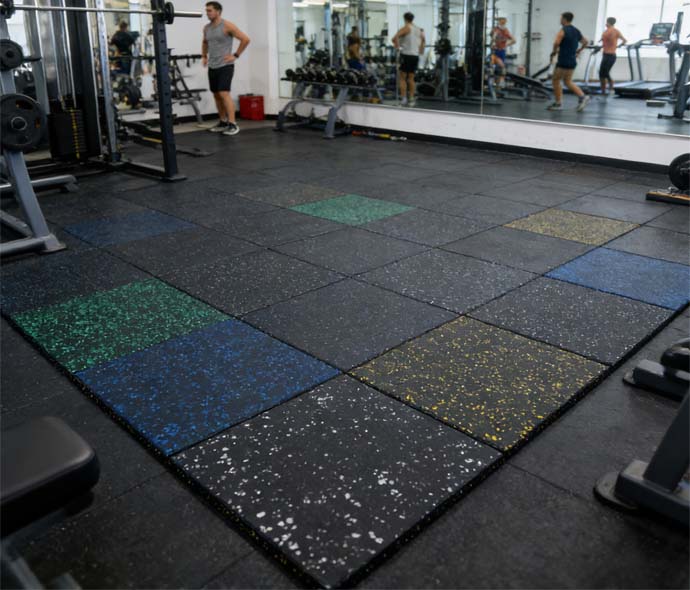
Installed floor
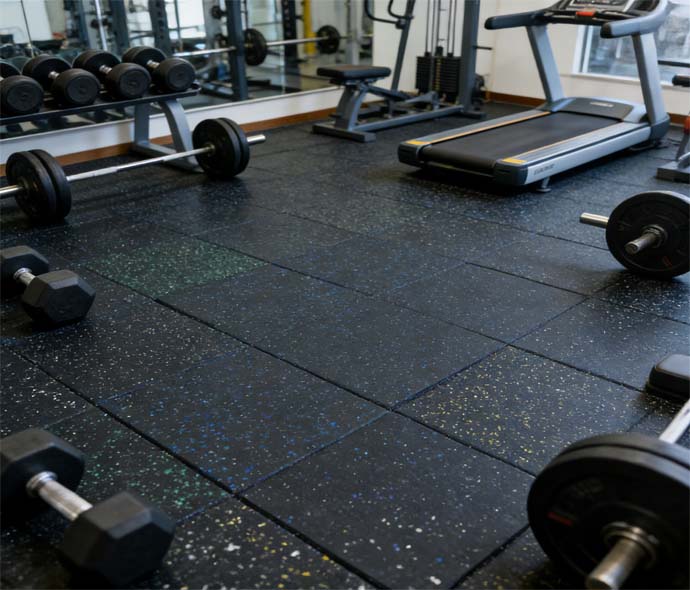
Black speckled tiles installed across a commercial gym floor.



Buyers comparing rubber floor tile manufacturers get SBR gym tiles with optional EPDM flecks from Crosste, made to your drawing—not a fixed catalog. Size, thickness, color and logo are set at quote.
The tile is an SBR rubber body with optional wear-resistant EPDM color/white flecks in an anti-slip speckled finish. The dense structure is engineered for weight-drop and impact training and for heavy gym equipment, and it absorbs much of the noise and vibration that come with both. Rubber needs little daily upkeep, which keeps downtime low in a busy facility.
| Item | Specification |
|---|---|
| Material | SBR rubber granules with optional EPDM color/white flecks |
| Available sizes | 500 × 500 mm and 1000 × 1000 mm |
| Thickness options | 15 mm, 20 mm, 25 mm, 30 mm |
| Surface finish | Anti-slip speckled finish (EPDM flecks optional) |
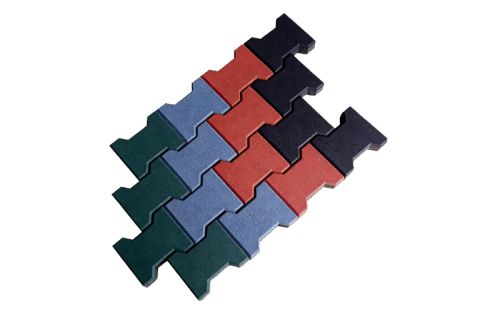
| Edge type | An interlocking-tab tile is shown in the gallery below; the edge for your order is confirmed at quotation |
| Customization | Size, thickness, density, color, logo; OEM and ODM |
| Application areas | Commercial gyms, fitness centers, weight rooms |
Density, thickness tolerance and drop-test results depend on the thickness and formulation you choose, so we do not publish one generic figure for the whole range. Ask for the numbers you need in your inquiry, and we will confirm what is available for your spec before you commit. We also don't publish a price band or MOQ here, because both move with thickness, size, color and logo. They are confirmed once your requirements are set.
Crosste rubber gym tiles use SBR granules as the primary material, with optional white or colored EPDM speckles. The range includes 500 × 500 mm and 1000 × 1000 mm formats, available in four thicknesses: 15, 20, 25, and 30 mm.
The rubber construction provides a resilient surface for everyday fitness activities while helping cushion equipment contact and limit noise. Buyers can combine different thicknesses and surface appearances to suit the demands of individual training zones.
A cardio area and a free-weight section do not necessarily need identical flooring. Selecting tiles according to each area's usage helps gym operators avoid unnecessary over-specification. Distributors can also serve different project requirements through a coordinated range of sizes, thicknesses, and finishes.
Product samples and specification sheets allow buyers to examine the rubber composition, surface finish, dimensions, and thickness before placing a bulk order. Relevant test documentation can be reviewed where available, helping procurement teams assess product suitability against their project requirements.
One thickness rarely suits a whole facility. Specifying by zone avoids over-building walkways and under-protecting the areas where weights land. These are our recommended starting points:
| Zone | What the floor takes | Starting thickness |
|---|---|---|
| Free-weight and lifting platforms | Repeated weight drops, concentrated load | 30 mm |
| Power rack and equipment areas | Heavy static load, some impact | 25 mm |
| Functional and cross-training floor | Mixed foot traffic and moderate impact | 20 mm |
| Circulation, stretching and cardio edges | Foot traffic, light load | 15 mm |
Tell us the heaviest drop in each zone and how often it happens, and we confirm or adjust the thickness per zone. Mixed thicknesses can be supplied in the same project, with color used to mark the zones.
Black speckled tiles installed across a commercial gym floor.

Tile stack with a studded top tile and interlocking corner connectors.

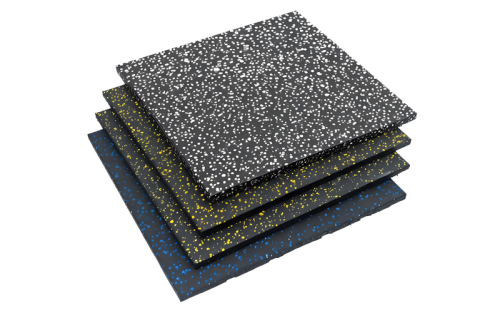
The four standard thicknesses side by side, with the granule texture visible at the edge.

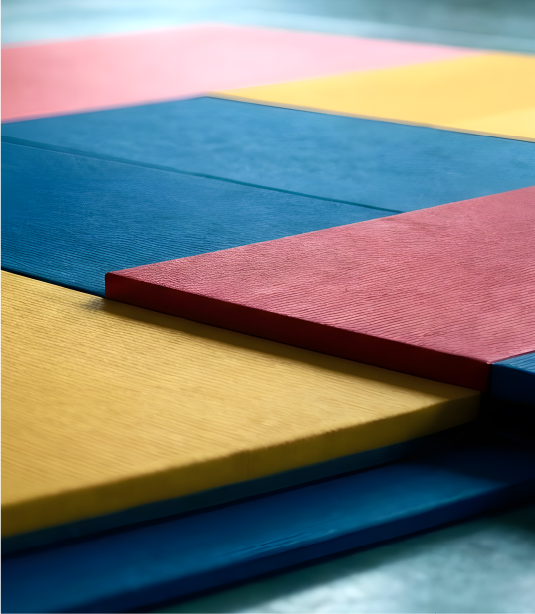
Colored rubber tiles used to separate walkways and zones, indoors and outdoors.
We work as a gym rubber mat manufacturer on an OEM and ODM basis, so the product is adjusted to your project instead of picked from a SKU list. Through the OEM and ODM service, custom rubber gym mats can be specified on these points:
Size and thickness: the standard sizes and 15–30 mm range above, or a custom size and thickness for a specific zone.
Density and surface texture: set to the way each area is used.
Color: Pantone color matching, for zone-coded layouts or brand colors.
Logo and branding: graphics can be silk-screened or heat-transferred, marks can be embossed or debossed into the rubber, and labels or patches are also available. The best route depends on tile thickness and surface, and we confirm it at quotation.
Private label and packaging: cartons and labelling in your own brand, for resale or a chain-wide rollout.
For distributors, that makes us a gym mat supplier who can put your brand on the product. The same approach carries across our rubber sports flooring, from gym floors to outdoor pavers.
Crosste Sports Goods Factory is a subsidiary of Crosste Group, with 10+ years in the industry and exports to 99+ countries and regions. As a gym rubber flooring manufacturer working on an OEM/ODM, wholesale and project-supply basis, we handle spec changes and quotes ourselves, with no reseller in between.
Crosste coordinates export logistics, global sales support, and after-sales follow-up for international buyers. The tile itself is made to your specification. If you are comparing speckled-surface SBR ranges from different flooring manufacturers, we also offer a second SBR gym flooring range (optional EPDM color/white flecks) for gyms and schools.
Inquiry and requirements: you send the area, tile size, thickness per zone, color and branding needs.
Proposal and quotation: we confirm the spec and quote against it.
Sampling, if needed: check color, surface and thickness before committing.
Production: a small batch or a large volume, run to the spec approved in the quote or sample.
Inspection and shipping: QC checks, then export packing and dispatch.
Standard orders usually take 2–4 weeks. A custom spec gets a confirmed production schedule before work begins.
Company-level standards on file are CE, SVHC, RoHS and EN71. Whether each one applies to a given tile model is confirmed per model, and we supply documents on request. We do not claim a named impact or slip test standard for these tiles on this page. If your project requires one, name it in your inquiry and we will tell you whether a report is available.
Fresh rubber can carry a mild initial odor. We cannot promise a low-odor or low-VOC grade from this page. If indoor air quality matters for your facility, say so in the inquiry and we will confirm what the formulation allows and which documents we can provide.
Rubber gym tiles cover weight rooms. Pair them with Crosste mats and outdoor surfaces when the same project needs more than one floor.
Rubber tiles are heavier and usually cost more than foam or EVA alternatives, and fresh rubber can carry a mild initial odor. Quality also varies with density and binder, so ask any supplier for the figures for the exact thickness you are buying, including us.
Price depends on thickness, density, size, color or surface finish, logo and order volume. We quote once your requirements are confirmed, so the figure matches your actual specification rather than a generic list price.
To quote rubber gym tiles for your facility, send the floor area to cover split by zone, tile size (500 × 500 mm, 1000 × 1000 mm or custom), thickness per zone (15, 20, 25 or 30 mm) and the heaviest weight drop, color or Pantone reference, logo or private-label requirements, any test standard, odor or VOC requirement, plus target quantity and destination country. We will come back with a proposal.
We will provide you with a seamless service experience throughout. Feel free to contact us.

