UWW Wrestling Mat Dimensions: Official Size, Zones, Thickness, and Layout Guide
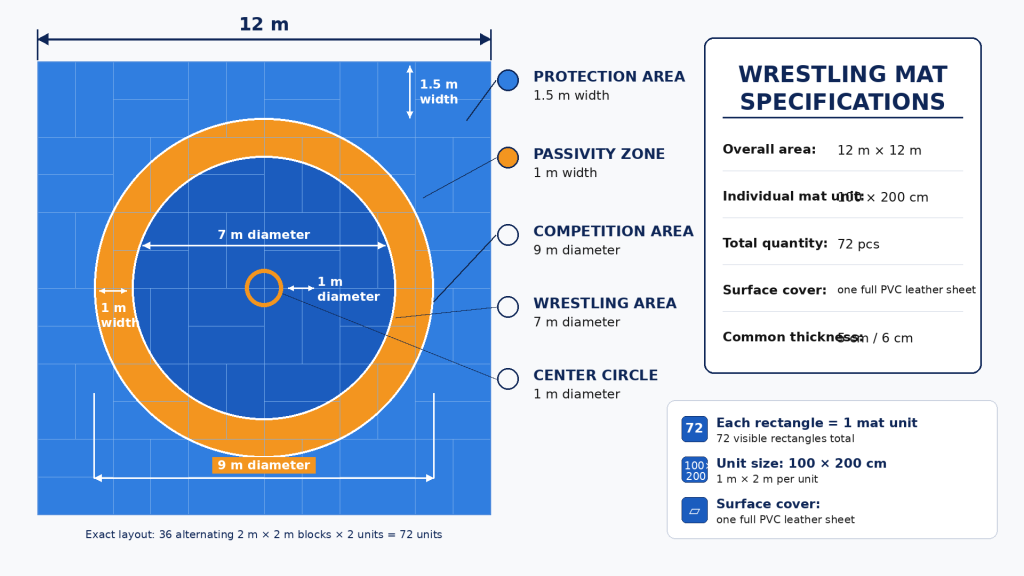
A UWW-compliant wrestling mat is a 12 m × 12 m square, made up of a 9 m diameter competition area and a 1.5 m wide protection area on every side. Inside the 9 m competition circle, the layout includes a 7 m central wrestling area, a 1 m wide orange passivity zone, and a 1 m diameter central starting circle. Common mat thickness is 5 cm or 6 cm, while UWW-certified mats are generally within the 5–7 cm range. Get any of these numbers wrong and your venue may fail event requirements — so this guide walks through every official dimension and what it means when you actually lay the mat down.
The Official UWW Mat Footprint at a Glance
United World Wrestling defines the official competition mat as a square — not just a circle — measuring 12 m × 12 m for senior international competition. The wrestling action takes place inside a 9 m diameter competition circle, and everything outside that circle, up to the 12 m square edge, is the protection area.
That gives you 1.5 m of protection on each side of the central competition area. For Olympic Games, World Championships, continental events, and other official UWW competitions, the mat must use the full 12 m × 12 m layout and meet UWW certification requirements.
For non-international events and training use, smaller formats are also common. Many clubs, schools, and training rooms use 6 m × 6 m, 9 m × 9 m, or 10 m × 10 m mats depending on available floor space and training intensity. However, formal Olympic, World Championship, and continental-level events must use a 12 m × 12 m UWW-certified mat.
If you’re sourcing for a multi-purpose facility, our wrestling mat product range covers official competition layouts as well as practical training formats in modular sections.
Top-down view of 12m by 12m wrestling mat layout with all zones marked
Inside the 9 m Circle: Zones You Must Get Right
The 9 m competition circle is not one solid color. UWW-style wrestling mats are divided into several clear zones, each with a fixed dimension and a specific refereeing function.
The Central Wrestling Area
The central wrestling area is a 7 m diameter circle. This is where most of the bout takes place. Once the 1 m passivity band is added around the 7 m central area, the total competition circle reaches 9 m in diameter.
The Passivity Zone / Orange Zone
A 1 m wide orange band wraps around the central wrestling area, forming the outer part of the 9 m competition circle. This is commonly referred to as the passivity zone. When a wrestler moves into this zone, it gives referees a clear visual cue for edge control and passivity judgment.
Get this width wrong — even by a small amount — and the visual layout becomes inconsistent for officials, athletes, and video review.
The Central Starting Circle
Dead center sits a 1 m diameter circle used for the start and restart positions. The line itself is typically visible enough for athletes and referees, but the circle diameter should remain 1 m.
For instance, some buyers ask to enlarge the center circle so coaches can see it more clearly from the sideline. For official layouts, this should not be done. The correct solution is to improve line visibility, not change the official diameter.
The Protection Area: The 1.5 m Safety Margin That Matters
The strip between the 9 m competition circle and the 12 m square edge is called the protection area. It is 1.5 m wide on every side.
This protection area is essential because wrestlers regularly fall, roll, and get pushed outside the central competition circle. The protection area must provide the same safe landing support as the main mat surface — it should not be replaced with a thinner or weaker edge material.
Color-wise, the protection area is usually a contrasting color from the orange passivity zone, making the competition layout easy to understand from above, from the referee position, and on video.
If your facility hosts both training and competition, modular protection-area sections are easier to replace when one section wears out from repeated foot traffic.
Thickness and Shock Absorption: 5 cm, 6 cm, or 7 cm?
For official-style wrestling mats, common thickness options are 5 cm and 6 cm. UWW-certified mats are generally produced within the 5–7 cm range, depending on certification requirements, foam structure, and event level.
For school-level or general training use, some facilities may choose thinner or smaller training mats, but for formal competition use, buyers should specify the required thickness clearly before production.
Foam Density
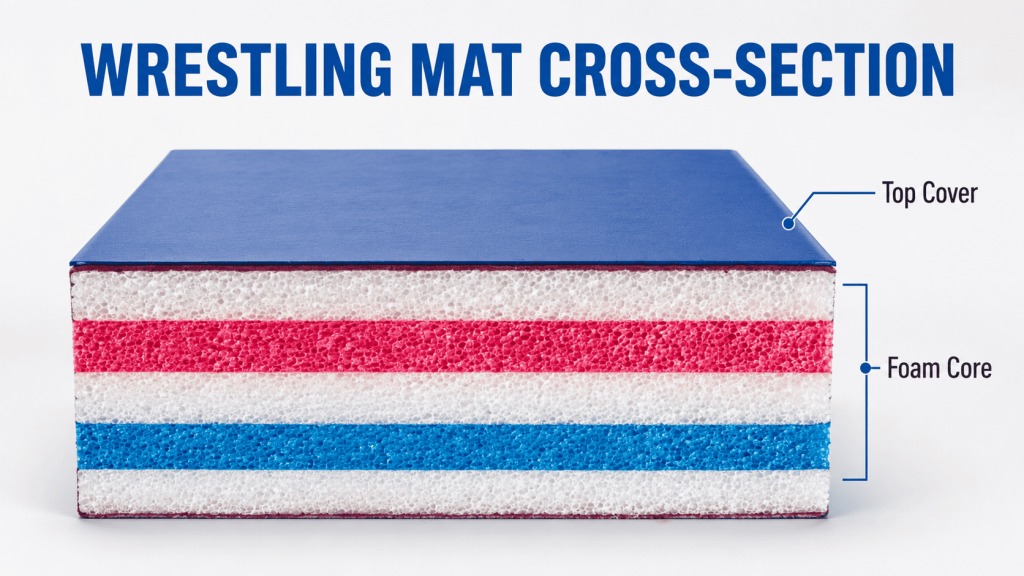
The core is typically cross-linked polyethylene foam or high-density PE foam. The mat needs to absorb impact from throws while still remaining firm enough for stable footwork, stance changes, and explosive movement.
A mat that is too soft may bottom out under heavy impact. A mat that is too hard may feel uncomfortable during long sessions and increase landing stress.
Compression Recovery
A quality wrestling mat should recover well after compression. Good rebound helps prevent visible dead spots and keeps the mat surface consistent during repeated training or competition use.
When comparing suppliers, buyers should ask not only about thickness, but also about foam density, compression recovery, surface material, and certification support.
Cross-section of wrestling mat showing foam core and vinyl top layer
Top Cover Specs: IBR Vinyl, Anti-Slip, and Hygiene
The top surface is usually IBR vinyl or a reinforced vinyl cover laminated to the foam core or placed as a full-surface cover. It should be durable, easy to clean, and suitable for high-contact sports.
Important surface requirements include:
Anti-slip texture for stable movement
Skin-friendly surface that does not abrade easily
Easy cleaning and disinfection between sessions
Strong color performance for the central area, orange passivity zone, and outer protection area
Secure seams or cover installation to prevent shifting during wrestling
If your facility doubles as a judo or BJJ space, the trade-offs change significantly — we cover the grip and impact differences in our breakdown of tatami vs. smooth surface judo mats.
Sectional Layout: How Mats Connect Without Gaps
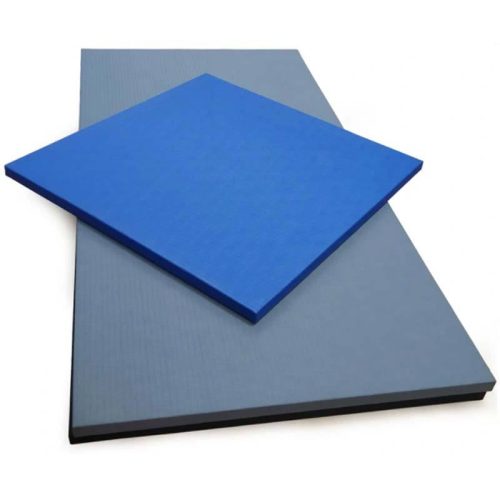
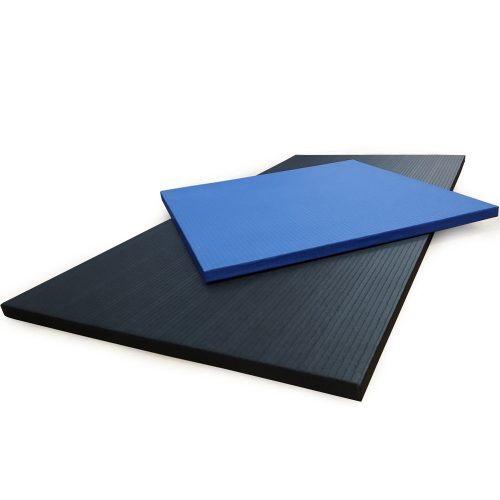
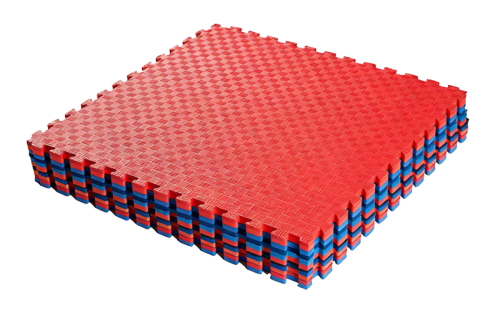
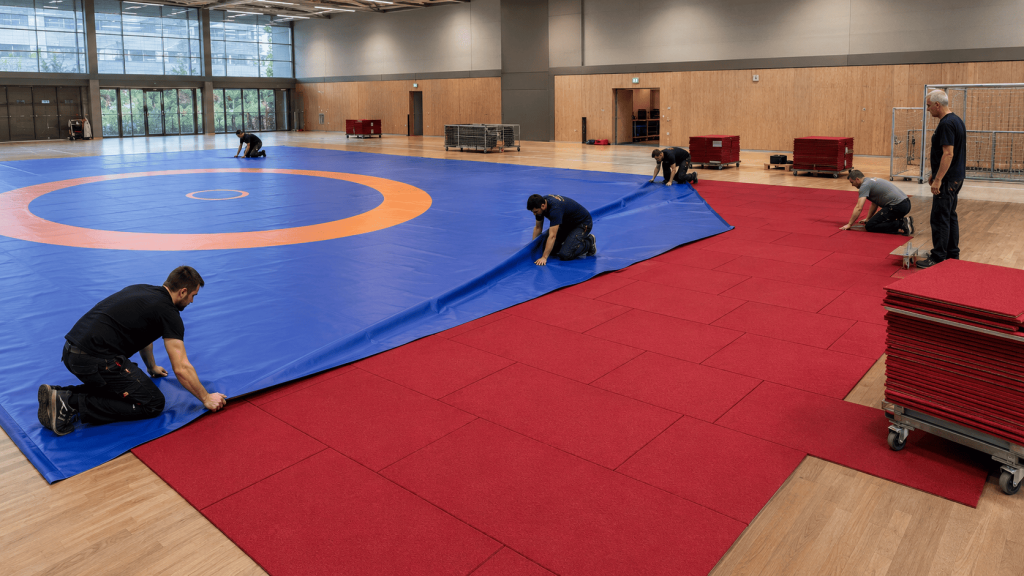
A 12 m × 12 m mat is never one piece — it ships as multiple sections that lock together on site. Common A 12 m × 12 m wrestling mat is usually not shipped as one solid piece. It is assembled from modular sections on site.
One common single-panel specification is:
2 m × 1 m × 5 cm
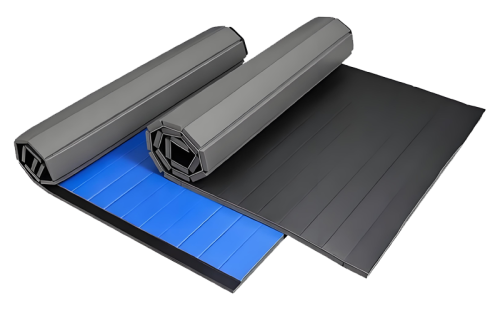
Using this specification, 72 pieces can be assembled into one complete 12 m × 12 m wrestling mat. This format is practical for sports halls, clubs, schools, and event venues because it is easier to transport, install, remove, and store.
Other common configurations include:
2 m × 1 m panels — 72 panels for a 12 m × 12 m mat
2 m × 2 m panels — fewer seams, but heavier to handle
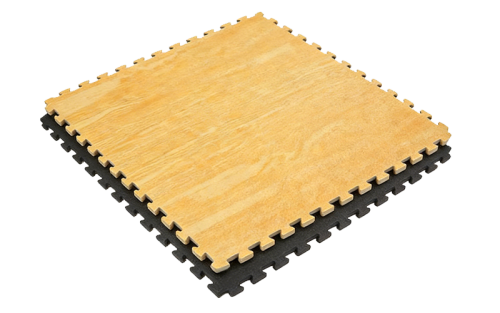
Custom interlocking or puzzle-edge designs — useful for reducing lateral movement during training
For competition presentation, the assembled mat may be finished with heavy-duty vinyl tape across the seams or covered with a one-piece printed top cover. A full-surface cover helps reduce visible seam gaps, improves cleaning efficiency, and gives the mat a cleaner broadcast appearance.
Subfloor, Platform, and Installation Considerations
UWW competition mats are usually installed on a sports floor or raised platform, depending on event requirements. For large official events, the platform and surrounding safety area must be planned together with the mat layout.
For permanent training rooms, the subfloor matters more than many buyers expect. A very hard concrete base can increase impact feedback and may shorten the lifespan of the mat. For better comfort and durability, facilities may consider:
A shock pad underlayment beneath the mat
A sprung wood subfloor for higher-level training centers
Secure but removable perimeter fixing
Edges should be secured, but the mat usually should not be permanently glued to the floor. Wrestling mats often need to be removed for cleaning, storage, event conversion, or replacement.
Modular wrestling mat panels being assembled in a sports hall
Customization for Clubs, Schools, and Federations
The official UWW competition dimensions are fixed, but many other details can be customized for training, school, club, and federation use.
Common customization requests include:
Logo printing on the protection area
Federation, club, or school branding
Custom color combinations for training mats
6 m × 6 m, 9 m × 9 m, or 10 m × 10 m layouts for non-international training use
12 m × 12 m UWW-style layouts for formal competition preparation
Modular packaging for easier transport and storage
For procurement teams sourcing at scale, our OEM and ODM service covers custom foam thickness, surface colors, branded printing, packaging, and layout drawings. Lead times for a fully custom 12 m × 12 m wrestling mat usually depend on quantity, artwork confirmation, and certification requirements.
Buying Checklist Before You Order
Before you sign a purchase order, run through this short list:
Confirm the event level: official UWW competition, national event, school use, or daily training.
For Olympic, World Championship, and continental-level events, use a 12 m × 12 m UWW-certified mat.
Confirm the full layout: 9 m competition circle, 7 m central wrestling area, 1 m orange passivity zone, and 1.5 m protection area.
Specify the center circle: 1 m diameter.
Specify thickness clearly: common options are 5 cm and 6 cm, while UWW-certified mats are generally within the 5–7 cm range.
Confirm the panel size if using modular mats, such as 2 m × 1 m × 5 cm.
For a 12 m × 12 m mat using 2 m × 1 m panels, plan for 72 pieces.
Ask for a CAD layout showing exact zone diameters, colors, and logo positions before production.
Plan storage and transport space in advance.
UWW wrestling mat dimensions look simple on paper, but the difference between a mat that fits official requirements and one that causes problems usually comes down to a few key numbers: 12 m × 12 m, 9 m, 7 m, 1 m, 1.5 m, and the correct certified thickness range.
If you’d like a spec sheet tailored to your venue, talk to our team through the contact page and we’ll send drawings, foam specs, and a fixed quote.

 Home Use Roll Up Wrestling Mat for Training and Practice